Thoughts on Howells
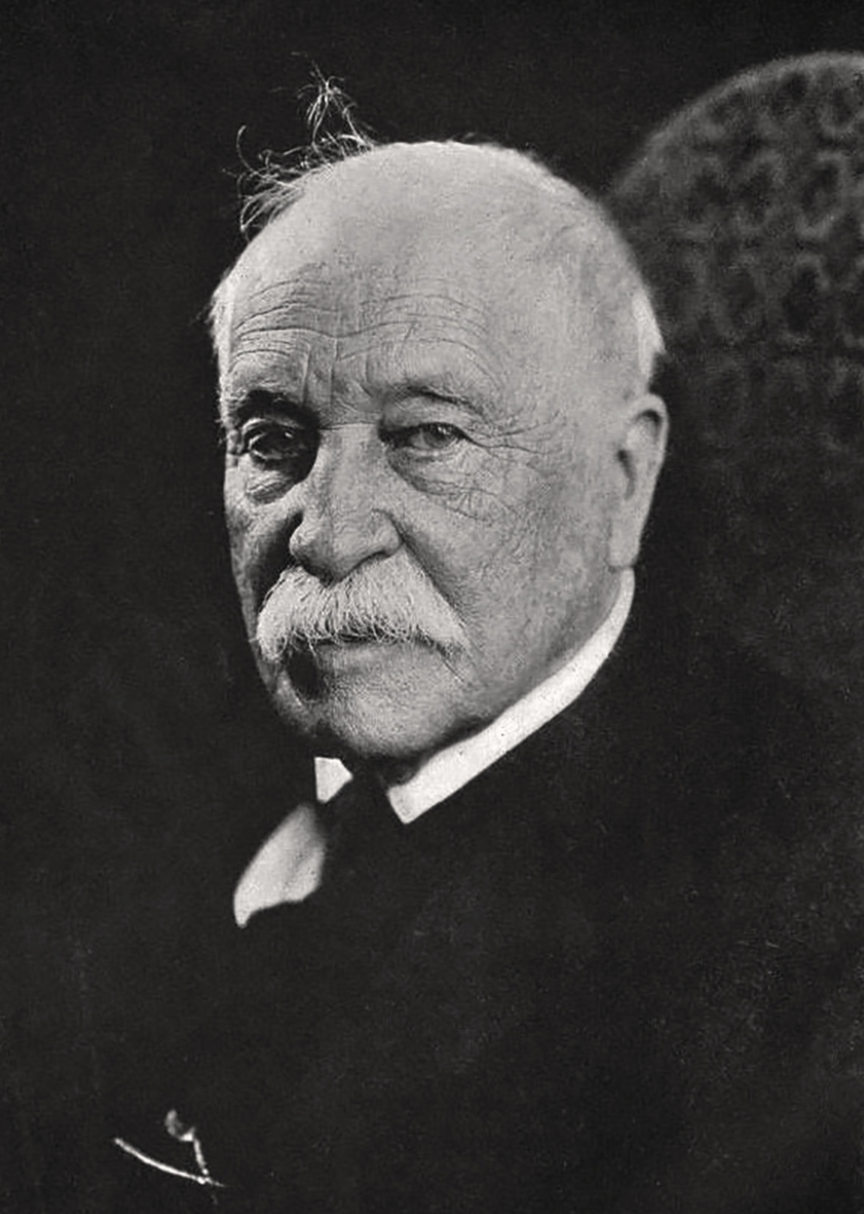
William Howells’ The Rise of Silas Lapham (1885) is a successful application of literary realism with respect to the complex, dynamic, and relatable characters. Howells layers his characters with faults and virtues and reveals limits that are unique to each of their strengths. The characters respond to events that are both self-created and outside of their control, showing growth and change over time. As such, the characters in this novel are not static and consequently mirror realistic people. Howells does not aim to represent or exaggerate any one virtue or vice for the sake of making a moral point or teaching an ethical lesson. Unlike the caricatures depicted in the works of earlier Romantic authors, like James Cooper and Nathaniel Hawthorne, the complexity of Howells’ characters and their ability to draw our sympathies provides examples of appropriate and inappropriate behavior that is context sensitive. However, the plot of the novel is where Howells stretches the concept of literary realism. While the “American Dream” is possible, it is also very improbable. Silas Lapham emblemizes the “American Dream” and is therefore a very ordinary man in rather unordinary circumstances. The driving force of the story is whether or not the Laphams will beat the odds and successfully become a statistical outlier.
Howells’ literary realism is mostly visible in his main character, Silas Lapham. Silas is a character wrought with imperfections as well as simple honesty and compelling virtues of hard work and family values. Howells builds multiple layers into his main character, showing him as a proud man that becomes blindsided by his own lack of humility. On the one hand, Silas’ pride is deserved; on the other, his pride goes unchecked. The rise of Silas as a businessman does not translate into his rise as a socialite, nor as an investor or financial accountant. Nowhere is Silas’ lack of humility more poignant than when he has too much to drink in at the Corey’s dinner party where his belligerence exposes his deeper insecurities about how he is perceived (Howells, William D., The Rise of Silas Lapham. NY, NY: Literary Classics of the United States, Inc., 1982. pp. 1048-54). Silas’ insecurities are palpable, as seen by his anxiety over whether or not to wear white gloves to a society dinner (Howells, pp. 1029-30). Silas finds himself in a situation that he cannot control, which is difficult for a self-made man to digest. In society he is not judged by his business acumen, but instead by his rearing and lineage. It is pitiful to watch society chew him up and spit him out, so to say, and even more so when he apologizes to Tom Corey for his poor behavior the following day. Yet the apology becomes more humiliating than the dinner. Silas Lapham is an honest, hardworking veteran. His apology to Tom Corey is unwarranted and perceived by Tom as an offense to a birthright (Howells, pp. 1055 – 1057). Howells therefore successfully exposes human frailty in an otherwise tough character, which in turn makes Silas sympathetic. This layering of personality traits is a successful demonstration of the inherent depth of human nature and how deep insecurities may lie behind a hardened ego.
Howells also expounds the concept of literary realism by writing characters that are not static. In other words, the characters react to situations by adapting—they are not fixed and stoic like Cooper’s Scout, Hawthorne’s Hester Pyrnne, or Melville’s Captain Ahab. While change is seen in all of the Laphams throughout the novel, it is particularly compelling in Irene. At the beginning of the story Irene is akin to a porcelain doll. She is summarized mostly by her superficialities, namely her looks and pleasant manners, with apparently little or no gumption.
Irene spent her abundant leisure in shopping for herself and her mother…Irene dressed herself very stylishly, and spent hours on her toilet every day…With all her wonderful beauty, she had an innocence almost vegetable. (Howells, pp. 883-4.)
Irene is often spoken of by her parents as being the lesser intelligent child, although sweet and inoffensive. As the younger sister, Irene is naturally more vulnerable and naïve. It is therefore inferable that she is vulnerable. When Irene learns that Tom Corey, her would-be suitor, is in love with her sister, there is a hint of a bleak outcome when Irene takes a trip to the apothecary for some sleeping syrup (Howells, pp. 1090). It is somewhat surprising when Irene very maturely reacts to her disadvantageous circumstance. Irene, who is described as someone who is basically feeble, draws on an inner strength and contradicts the notion that she is merely a beautiful simpleton (Howells, pp. 1091-92). Irene’s character develops into a resilient young woman, thereby earning herself respect and dignity. Life for Irene must go on just as life generally must go on for most of us who experience disappointment in love. It is typical that life does not end after a sour love triangle and exceptional if and when it does. Howells therefore exhibits growth and adaptability by the way in which the young Irene responds to disappointment.
The lack of dramaturgical personalities is also seen in Persis Lapham. The matriarch of the Lapham family, Persis is an emblem of hard work, honesty, and fairness—she is the Lapham “brand”. Persis also comes from humble beginnings but unlike her husband has not entirely let it go to her head. That Persis is unable to navigate the intricacies of Boston society, and is therefore inept at providing her daughters with proper marriage opportunities, only extenuates her own morality. In other words, Persis is above the fray and the pettiness associated with society. It isn’t until later in the novel when Persis misunderstands her husband’s financial assistance to Zerilla that her virtuous temperament begins to crack (Howells, pp. 1176-1180). Persis fails to give Silas the benefit of the doubt when he needs it most. Persis’ common sense is not a helpful apparatus for recognizing when things are not what they appear. Later in the novel, Persis describes days when she admires her husband and days when she feels let down by him (Howells, pp. 1199). Although not the perfect ideal of marriage, Howells injects the notion that marriage is generally not ideal and is instead ripe with its ups and downs.
The moral lessons in Howells’ novel serve as helpful compasses for practical application. Silas, for example, is above board in his business dealings with the G. L. & P. property and Rogers even though he desperately needs money. Although Silas dug himself into a financial hole, he was unwilling to resort to fraud in order to fix it (Howells, pp. 1170-71). The lesson being that a reputation of integrity supersedes that of a financial prowess. Penelope’s development is of a more emotional kind, as she learns when it is appropriate to allow the head to follow the heart. In spite of her practical objections to marrying Tom, Penelope eventually reciprocates his feelings and in doing so gives validation to her own emotions. Howells, as such, depicts a very pragmatic way of offering up affection (Howells, pp. 1195). And yet the reverse of this lesson is applicable to Persis. Persis must figure out when practical boundaries take precedent over guilt related to injuries of the past. Although Persis may have been correct in recognizing that Silas wronged Rogers in past business dealings, her moral high ground got the better of her, and eventually of Silas. This, in turn, precipitated the Lapham’s financial downfall. The moral lessons in The Rise of Silas Lapham are not categorical imperatives; rather, Howells’ notion of morality depends upon the details of each circumstance, the personality involved, and how the individual attempts to respond to external adversity.
The existence of a Silas Lapham as a wildly successful businessman is perhaps the most exceptional aspect of the novel. The improbability of the self-made millionaire is a large part of what makes Howells’ novel so intriguing. Much of the driving force of the plot, aside from the romantic story line, is wrapped around the sustainability of the Lapham’s good fortune. While it is certainly the case that there are Americans that have come from little means and have risen to great prosperity, it is unfortunate that this is such an unlikely scenario. As such, the driving force of the story is really built on an anomaly. It may be that this was recognized by Howells and is why he chose to end the novel with the Lapham family losing much of their fortune and returning to their family farm (pp. 1190). Interestingly, the return of the Laphams to their family farm is like reaching an emotional equilibrium as none of the Lapham family members is unhappy with the decision to leave Boston, and no Bostonians are sorry to see them go. They are returning to their roots and, in a sense, returning to their truer selves, and even returning to a reality in which most of us live.
The most compelling and impactful aspects of Howells’ The Rise of Silas Lapham are his characters, particularly those in the Lapham family. Grounded in relatable qualities of imperfection and a striving to be moral and good, Howells creates sympathetic individuals that can be embarrassing and exemplary. The Lapham’s journey from rags to riches, and finally back to a middle ground, is filled with lessons that are unique to each personality type and range from business ethics, romantic relations, the appropriate applications of affection, and how to reconcile guilt, among others. Howells’ characters and their interwoven relationships are successful applications of literary realism. On the other hand, their circumstances are not embedded in a probable actuality. Since this is the driving force of the novel, there is a serious sense in which Howells’ does not meet his own terms of having the entire story embedded in reality. In comparison to the Romantic literature proceeding him, however, Howells achieves a more life-like way of storytelling.
