Thoughts on Jewett
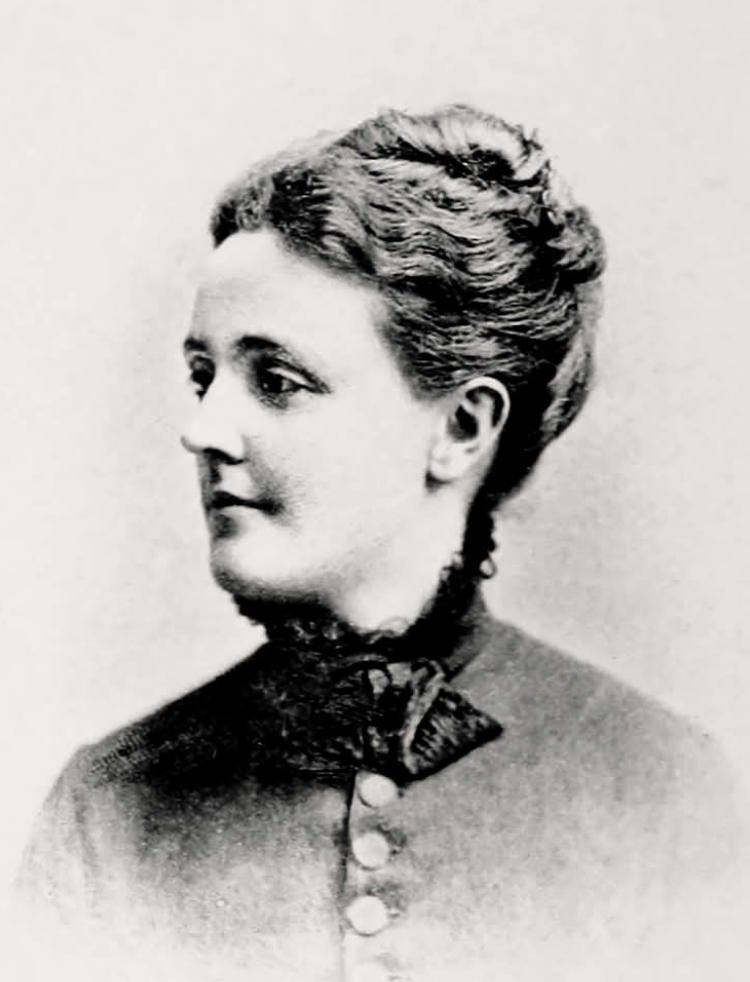
Sara Orne Jewett, in The Country of the Pointed Firs (1896), depicts the intricate community and landscape in the fishing town of Dunnet, Maine. Without adhering to a particular plot, Jewett instead embeds her female narrator into daily existence within Dunnet, which leads to an understanding of the rich history between the people and the land. Jewett’s literary regionalism serves as a way for her to contrast women and men, linking together women and nature with a sense of hope for the future. Men, on the other hand, are depicted as navigators and are linked to Dunnet’s past and the expression of logical reason. For Jewett, the contrast between women and men is a “friendly rivalry” (Jewett, pp. 89). In Jewett’s Dunnet, women and men are equally self-sufficient. The hearty women described by Jewett, including the narrator (a Dunnet outsider), are a stark contrast to the fictional women portrayed in the works of Henry James’ Daisy Miller (1878) and Edith Wharton’s The House of Mirth (1905), wherein the feminine is nearly entirely divorced from autonomy. Another similarity between the women and men of Dunnet is that both equally suffer from the perils of regular life. The women and men of Dunnet both express the same loneliness that is apparently rooted in the cold, northeastern coast of Maine.
Almiry Todd (Mrs. Todd) is the town’s herbalist and landlady to the narrator’s summer rental and is contrasted, by Jewett, to the village doctor. Mrs. Todd is like the heart of Dunnet—she knows and is known to all of its inhabitants and has deep familial roots in the territory. Like her herbs, Mrs. Todd is native to the soil. The herbs grown in Mrs. Todd’s garden are evidently ancestral, whereby “some of these might once have belonged to sacred and mystic rites, and have some occult knowledge handed with them down the centuries”. (Jewett, pp. 4) Mrs. Todd is depicted by Jewett as being necessarily connected to and symbolic of nature, and specifically the natural landscape of Dunnet. The village doctor, on the other hand, is described as using his medical training to “counteract” the “unfavorable effect of certain potions” that are created by Mrs. Todd. (Jewett, pp. 4) Hence, Jewett observes that there is a professional symbiosis between the herbalist and the doctor, or, between holistic remedy and scientific examiner. While both Mrs. Todd and the village doctor must do their own fair share of local travelling—herb gathering for Mrs. Todd and patient visiting, likewise—only the village doctor is described by Jewett as being worn, tired, and travelling off to Boston to “mouse around the other doctors, one in two or three years”. (Jewett, pp. 89) Unlike Mrs. Todd, the village doctor spends much of his time in an urban setting consorting with other scientists, apparently isolated from nature and away from his homeland.
At the depth of Mrs. Todd’s familial roots is her mother, Mrs. Blackett, a spritely 86 year-old who lives offshore on Green Island. Mrs. Blackett is the foundation of Mrs. Todd’s deep connection to nature and, as such, is also like a foundation for the village itself. Mrs. Blackett, therefore, is something like a village matriarch. The narrator, a temporary lodger and objective observer, describes meeting Mrs. Blackett for the first time, saying: “ You felt as if Mrs. Blackett were an old and dear friend before you let go her cordial hand.” (Jewett, pp. 36) There is no doubt that Green Island is perceived by Jewett’s narrator as a uniquely special land, flourishing with intrinsic beauty, fertile soil, and breathtaking views of the sea and distant shore. As occupier of Green Island, Mrs. Blackett is herself exceptional: “Tact is after all a kind of mindreading, and my hostess held the golden gift.” (Jewett, pp. 46) Mrs. Blackett epitomizes a welcoming and kindred spirit: she is the glue that binds together her community of people. More importantly, Mrs. Blacket represents the harmony between her community with the land of Dunnet, and the hope of its continuation in future generations. In spite of her impressive age, Mrs. Blackett is not described as haggard; rather, “you felt as if she promised a great future, and was beginning, not ending, her summers and their happy toils”. (Jewett, pp. 40) Mrs. Blacket’s warmth is a counterbalance to the Island, which is itself cold and distant.
Unlike the vivacious Mrs. Blackett, Jewett depicts men in The Country of the Pointed Firs assomewhat brooding and lost in a gloomy past. One of the best examples of this in the novel is Captain’s Littlepage and his recounting to the narrator of his voyage on the Minerva. (Jewett, pp. 16-29) The Captain is a retired seafarer who, though physically well presented, is thought of by his fellow villagers as being subject to irrational “spells” (Jewett, pp. 23). He recounts how his ship, the Minerva, encountered a storm and was driven northward where it became stranded on the rocks of a desolate, freezing Island. Jewett describes Captain Littlepage as “grave” (Jewett, pp. 17) and having a “dulled look in his eyes” that became “dark and piercing”. (Jewett, pp. 22) The Captain also makes references to how Dunnet has changed from a town of sea voyagers to one of “loafers”. (Jewett, pp. 20) This pessimistic outlook on the community of Dunnet is very different from the sense of comfort and enthusiasm described above. The Captain, as such, is depicted by Jewett as stuck in the past to such an extent that it effects his overall grasp on reality as well as his outlook and attitudes of the next generation.
Despite Captain Littlepage observing “loafers” in town, Jewett’s novel is ripe with the energy of women who spend nearly all of their time working. And so similar to men, women in Dunnet work and are a major economic contributing force. Mrs. Todd operates two businesses independently, i.e. landlady and village herbalist. Widowed, Mrs. Todd is nevertheless entirely self-reliant and able to maintain her property quite independently. This depiction of Mrs. Todd is entirely consistent with her overall character, as she is fundamentally practical, hardworking, and physically capable. Jewett’s novel presupposes that women can forage for themselves and are capable of physically arduous tasks typically associated with masculinity, such as fishing and sailing. Sometimes in the novel, the roles of feminine and masculine are in fact reversed by Jewett. For example, Mrs. Todd recounts a story in which she accompanies the village minister, Reverend Dimmick, to Shell-heap Island to visit a suffering hermit and friend, Joanna. While sailing, an aggressive gust of wind takes the sail and the village minister “give a screech and stood right up and called for help, ‘way out there to sea. I knocked him right over into the bottom o’ the bo’t, getting by to catch hold of the sheet…”. (Jewett, pp.70) Jewett is depicting Mrs. Todd as a no-nonsense, capable sailor that does not give in to panic and hysteria, qualities unfairly but often assigned to women (and showing that men are capable of panic, too).
Mrs. Todd is not the only woman who works in Dunnet. Jewett describes most of the women as having some occupation or another, whether it be farming, child rearing, or entrepreneurship. The community of Dunnet is premised on hard work in a brutal landscape. Work by both sexes is a necessity for the purposes of survival. This is why the women of Dunnet, who suffer from various ailments due to toiling farmland, visit Mrs. Todd for her medicinal cures. Even Jewett’s narrator, an outsider to the community, has an occupation as a writer. (Jewett, pp. 7) Hence, in the world that Jewett weaves, it would almost seem unnatural for women not to work, just as it would be presumably so for men. Jewett’s working woman flips other literary notions of femininity on their heads, such as James’ Daisy Miller, whose primary talent was flirting. Jewett’s female characters can similarly be contrasted with Wharton’s Lily Bart, a socialite who, in the absence of a male provider and/or generous inheritance, could not actually manage to hold a job to save her own life. In juxtaposition to Jewett’s Mrs. Todd and her narrator, Daisy and Lily’s aptitude for manipulation and social nuance appear nearly absurd. Perhaps, though, this was the point, i.e. to reveal the absurdity of certain feminine expectations, particularly in the higher classes of society.
This leads to a final observation of Jewett regarding how men, like women, are also capable of psychological suffering, loneliness, and social isolation. Jewett’s novel is rich with northeasterner hermits that are both men, e.g. William and Elijah Tilley, and women, e.g. Joanna. As such, both sexes are deemed by Jewett as perfectly capable of emotional vulnerability, which is a truth of the human condition. Although each character has their own reasons for their desolation, their suffering is collective in that it is reflective of the natural landscapes in the beautiful but harsh coastal town.
Jewett depicts men and women with symbolic attributes that differ, while also showing how their daily experiences in Dunnet are often the same. Women are symbols of nature and life, apparently inextricable from the very soil of Dunnet. Women tie the community together. Men, alternatively, are symbolic of far-away sea voyages and city travels, living in the realm of navigation and scientific cognizance. But the differences in symbolism, for Jewett, are not acrimonious. Rather, the contrasting depictions are intertwined and feed off of one another, in the way that the past can inform the present and provide the necessity of hope for the future. The symbolic differences of the two sexes are almost part of the land itself, and are combined with the shared, parallel experiences of hard work and general human suffering.
Works Cited
Jewett, Sarah Orne. The Country of the Pointed Firsand Other Stories. Edited by Mary Ellen Chase. Norton, 1981.
