Thoughts on Poe
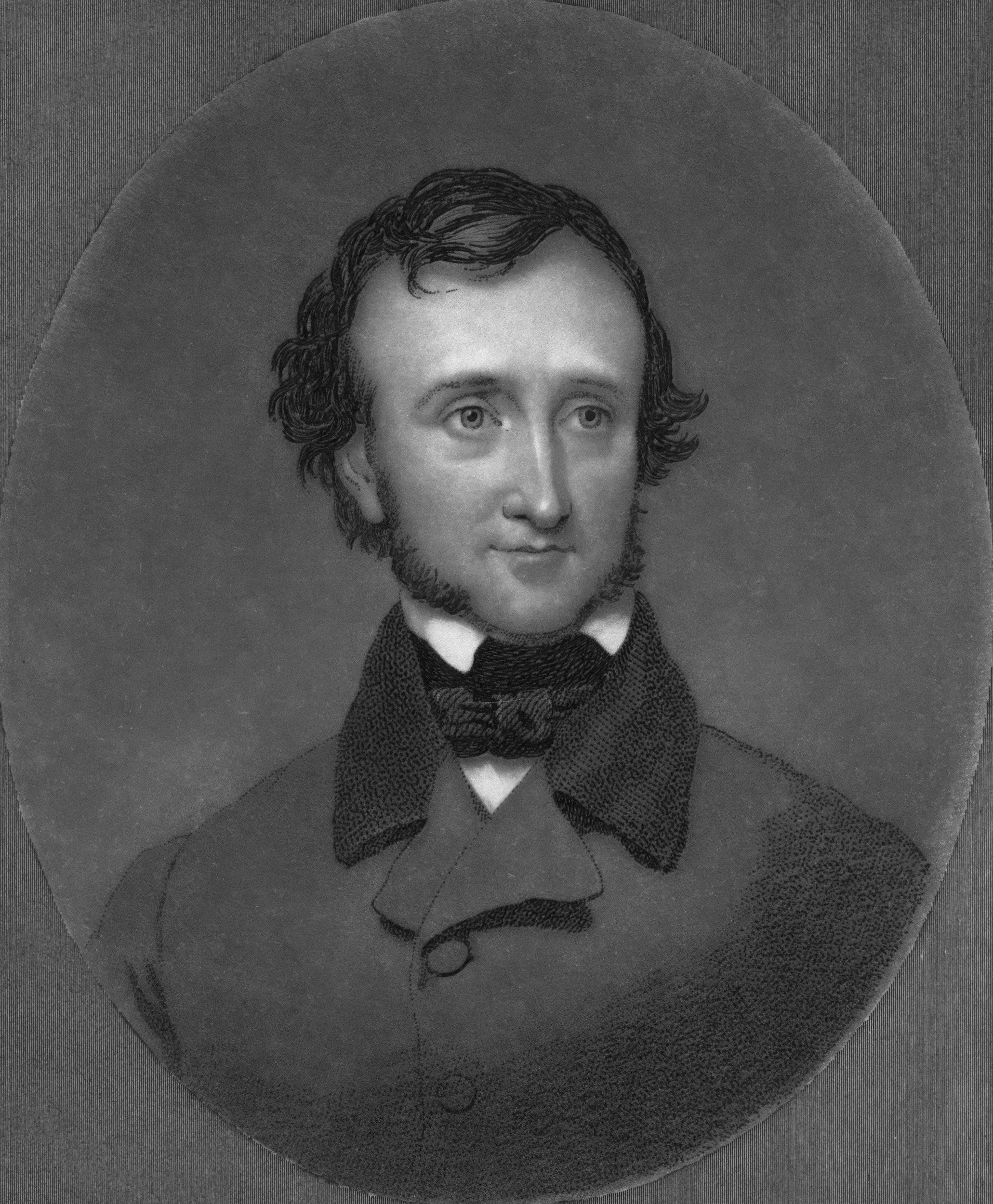
“Thus there is such a thing as being too profound. Truth is not always in a well. In fact, as regards the more important knowledge, I do believe that she is invariably superficial. The depth lies in the valleys where we seek her, and not upon the mountain-tops where she is found. … By undue profundity we perplex and enfeeble thought; and it is very possible to make even Venus herself vanish from the firmament by a scrutiny too sustained, too concentrated, or too direct.”
The Murders in the Rue Morgue, Edgar Allan Poe
Edgar Allan Poe’s writings provide insights into “the darkness” of human psychology, often playing on themes related to violence, death, and mystery. More specifically, Poe captures our fascination with such themes by juxtaposing them with cool rationality, logical deduction, and scientific method. During Poe’s time, the mid-19th century, the industrial revolution was at its tail end: machines were used for the calculus of manufacturing and scientific, empirical methods were the proven tools for the discovery of objectivity or “truth”. Additionally, rural populations had left their farms behind in search for urban work and existence. One of the consequences of urbanization was urban crime and its solution, the urban police force. In Poe’s who-done-it detective and mystery tales, Poe captures our psychological fascination with death and mortality while offering his readers tantalizing puzzles of cryptography and clue tracking. Despite using trend for a hook to his stories, as was perhaps the case with The Gold-Bug, Poe may also have been making deeper observations about the nature of human experience itself and how experience may be the ultimate arbiter of what is, and what is not. Perhaps the “truth” for Poe dwelt within human psychology [and outside of objectivity].
That Poe is able to lure his audience to entertain itself on a topic that is nearly too horrible to comprehend may mean that he has tapped into something intrinsic in the human psyche, namely, our obsession with our mortality. In The Murders in the Rue Morgue and The Mystery of Marie Roget, Poe captivates his readers with detailed accounts of the violent murders of several women. The women were mostly young, innocent, and beautiful, which makes the murders that much more difficult to endure and introduces an element of the perverse. Having had his own brush with the loss of a young wife, Poe was able to draw from his own personal tragedy. But we do not become familiar with the women who are murdered, and so we, as readers, are not in a position to empathize much or mourn their loss. What is captivating in Poe’s tales is not the death of a loved individual, but rather the end of something innocent, beautiful, and mysterious. It is therefore not the loss of a person with which Poe’s readers are engaged. It is the tragedy of death in and of itself and the wonderment of the actual experience. Death, after all is the ultimate mystery, which plays well into Poe’s style. Nobody who has been murdered can tell us what their pain was like, the shock and surprise of it, and what it felt like for life to leave their body. And while Poe’s audience wants to know who the murderer was and who could be capable of terrible crimes, the real underlying mystery—the experience of death, and death by murder—is something that can never really be solved, until perhaps one experiences it for oneself. Poe understands this need for us to want to know what can never be known, and so for every wound that he describes as having been inflicted on his victims, he is playing into that need.
Perhaps what makes such violent encounters palatable for entertainment is Poe’s sterile and matter-of-fact approach to their topic. For on the one hand we have murder and gore, but on the other we have a clinical method for its comprehension. Poe therefore also plays on the abstract reasoning abilities of the human psyche and our penchant for puzzles and problem solving. Psychologically, we can stomach horror and fear when encountered through an emotionally removed lens. As remarked on above, in Poe’s mystery tales the characters are not prominent. One sees this in such stories as The Gold-Bug and The Purloined Letter; we know nothing of the narrator (who remains unnamed throughout) nor his interlocutor (Legrand and Dupin, respectively). Poe’s readers have the opportunity to follow along with the reasoning patterns of an interested but not necessarily invested problem solver. The characters have nothing at stake (for the most part) and have suffered no personal loss of their own. As such, Poe clearly wanted these mysteries to be about methodology, and the applicability of the principles of empiricism and logical deduction. In The Gold-Bug we are brought into a story holding the hand of Legrand, someone who is wading in a shallow pool of insanity. But as we journey with him to deeper water, we move away from the mystery and fear of complete mental impairment towards a complex and intricate cryptology puzzle replete with a treasure hunt. These juxtapositions, i.e. the abyss of fear and a key for a complex map out, represent how abstract thinking and problem solving are quite literally methods to our madness.
These are all fascinating observations by Poe of the modern man in the mid-19th century. The practice of medicine during this time was changing—physicians were beginning to perform autopsies, germ theories were emerging. Machines were beginning to be programmed to do the work of laborers. Academics were debating social and power structures and whether or not logic was a first principle. And people were generally becoming urbanized. The extent to which Poe is criticizing the modern world may only be implicit in his mystery tales. Poe might ask: What can’t the physician performing the autopsy, the scientist performing a dissection, or the police on a fact finding mission tell us? They can’t tell us about the truth of human experience and the human condition. Logic cannot explain beauty; and scientists cannot make sense of the tragedy of death. Poe, as such, might argue that truth is psychological, and stories and poetry are tools for describing the truth of the human condition.
